

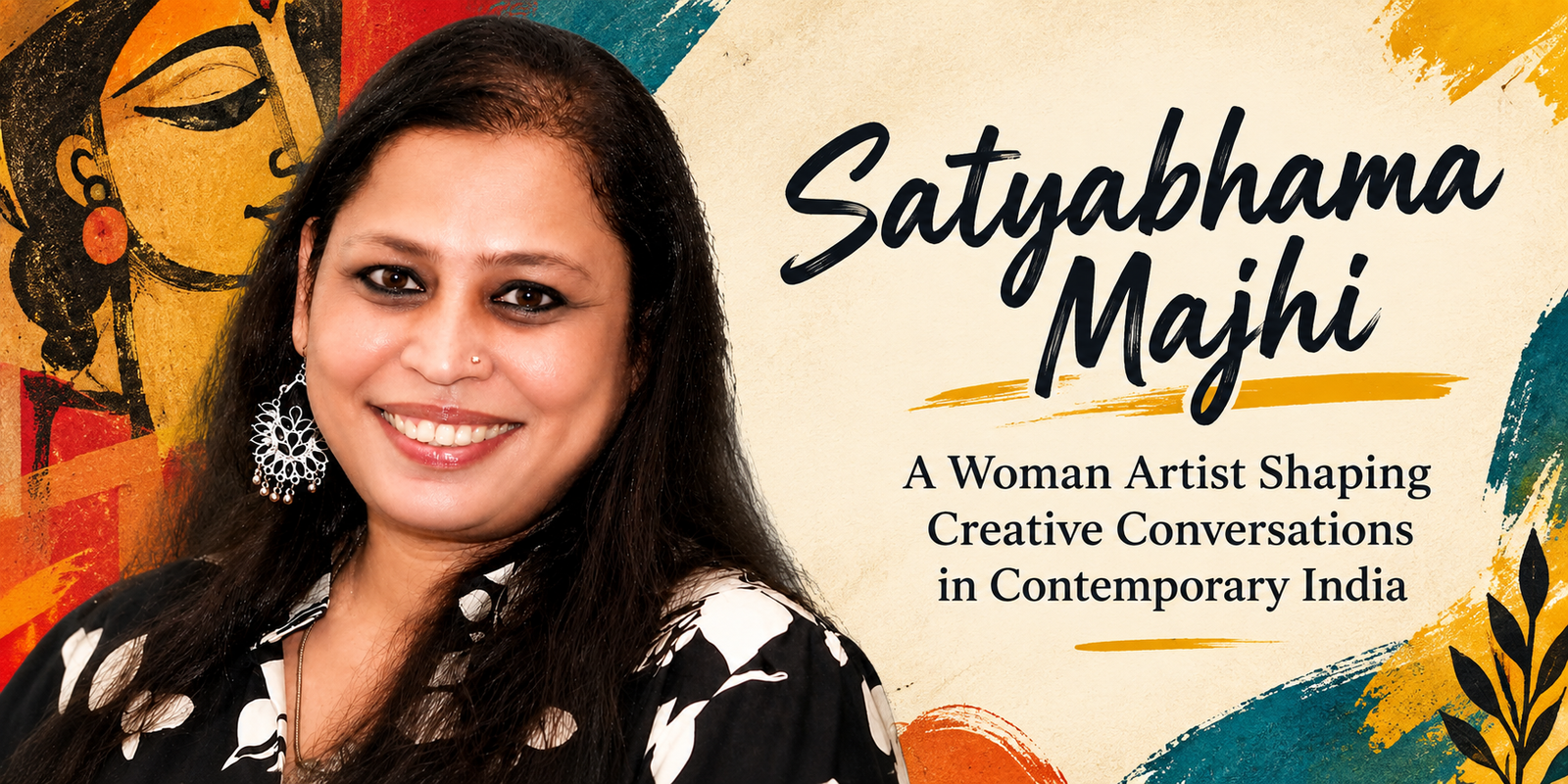
The idea of home is larger than a building or a geographical location. Home can be a landscape remembered from childhood, a neighbourhood filled with familiar sounds, a cultural practice passed between generations, or a community whose traditions shape an individual’s understanding of identity.
In contemporary Indian artist Satyabhama Majhi’s practice, questions of place and belonging emerge through her engagement with people, landscapes, cultural traditions and changing environments. Her paintings, installations, public-art projects and community-based activities repeatedly explore relationships between individuals and the places they inhabit.
Rather than presenting home as a fixed concept, Majhi’s work suggests that belonging can be created through memory, experience, cultural connection and participation.
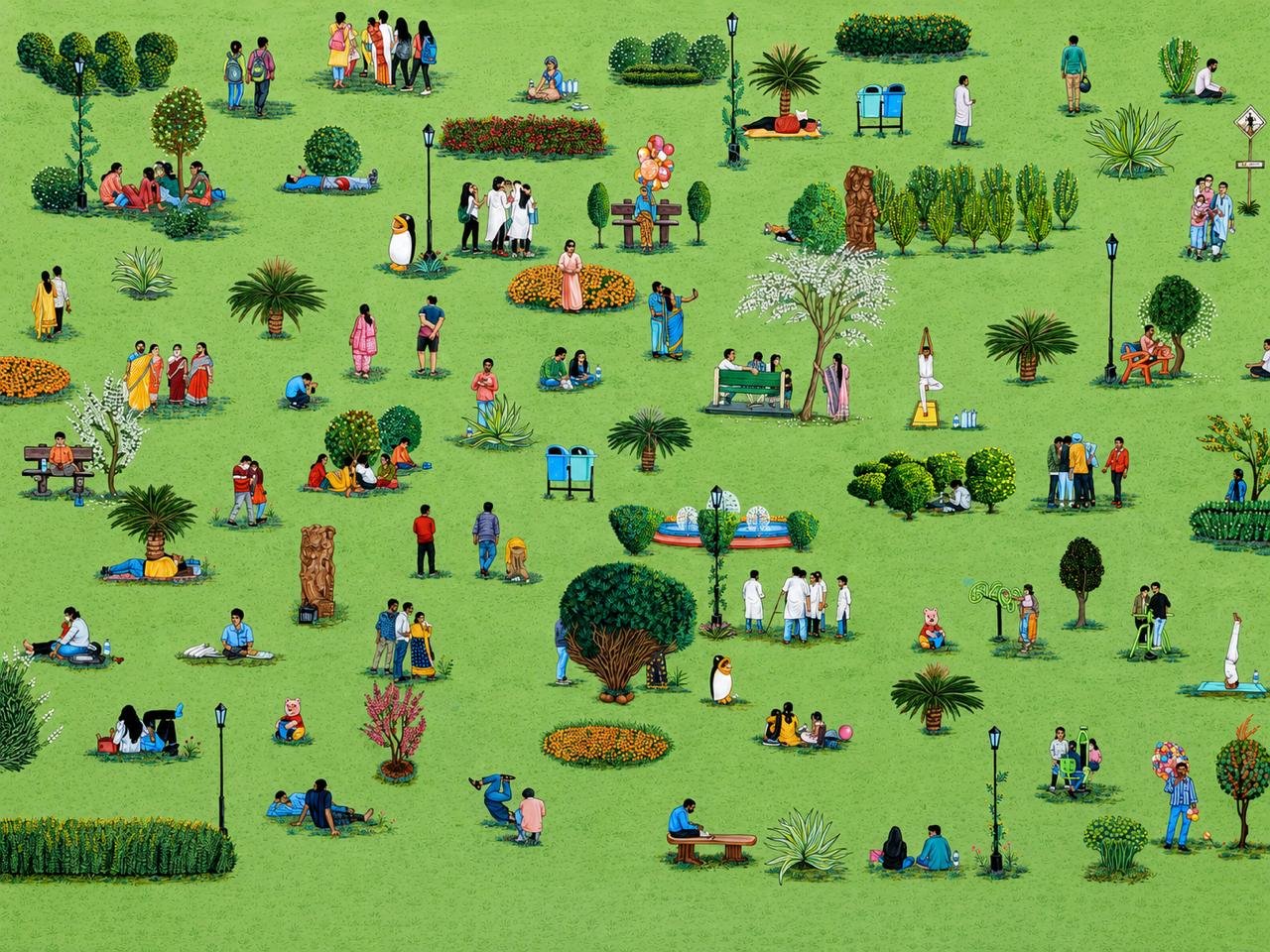
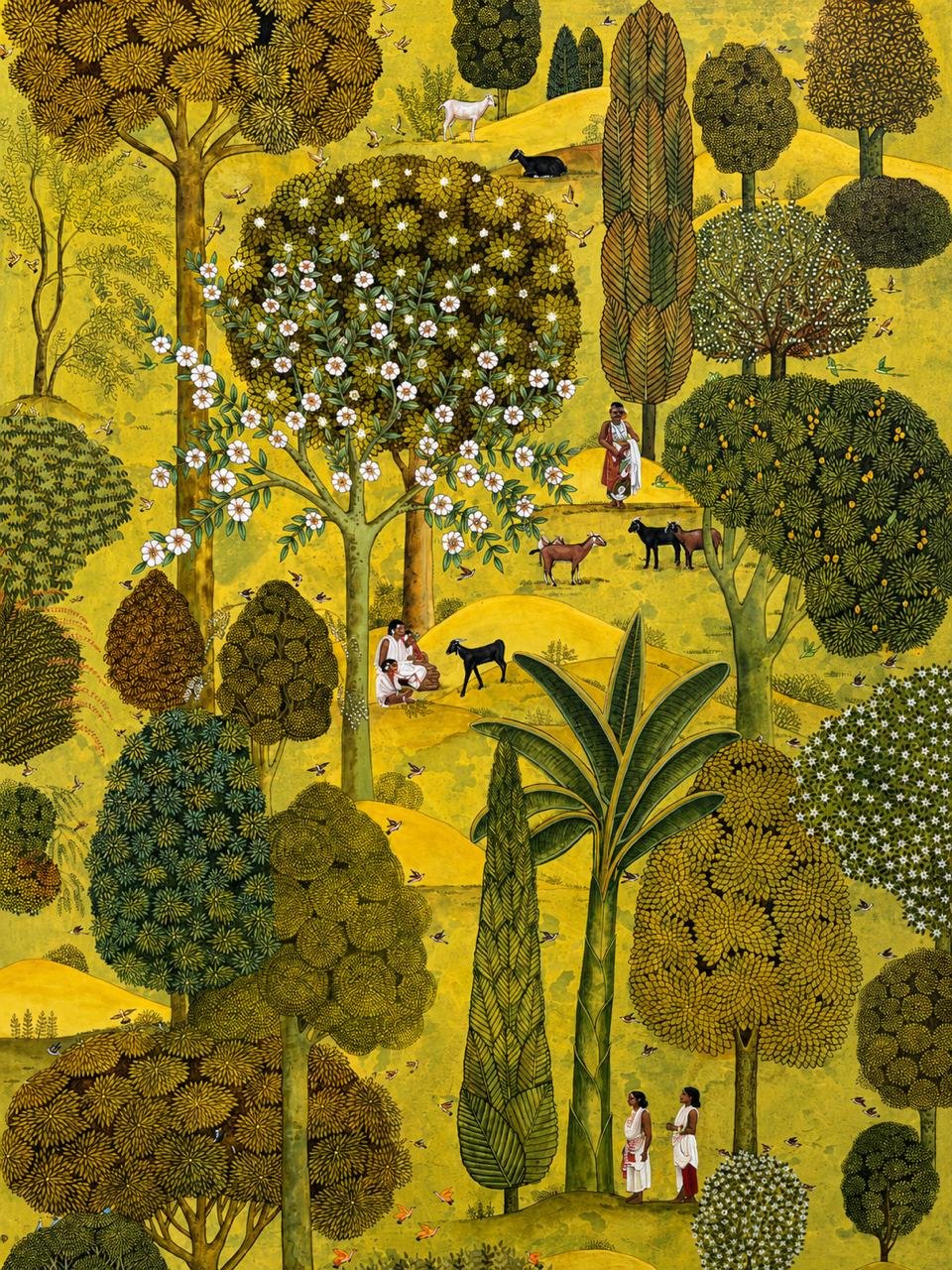
Home as More Than Geography
A geographical location can identify where a person lives, but it does not necessarily explain why that place matters.
A place becomes meaningful through experience.
It may contain memories of family life, familiar landscapes, community relationships, festivals, occupations and cultural practices. Over time, these experiences create an emotional connection that transforms physical surroundings into a sense of home.
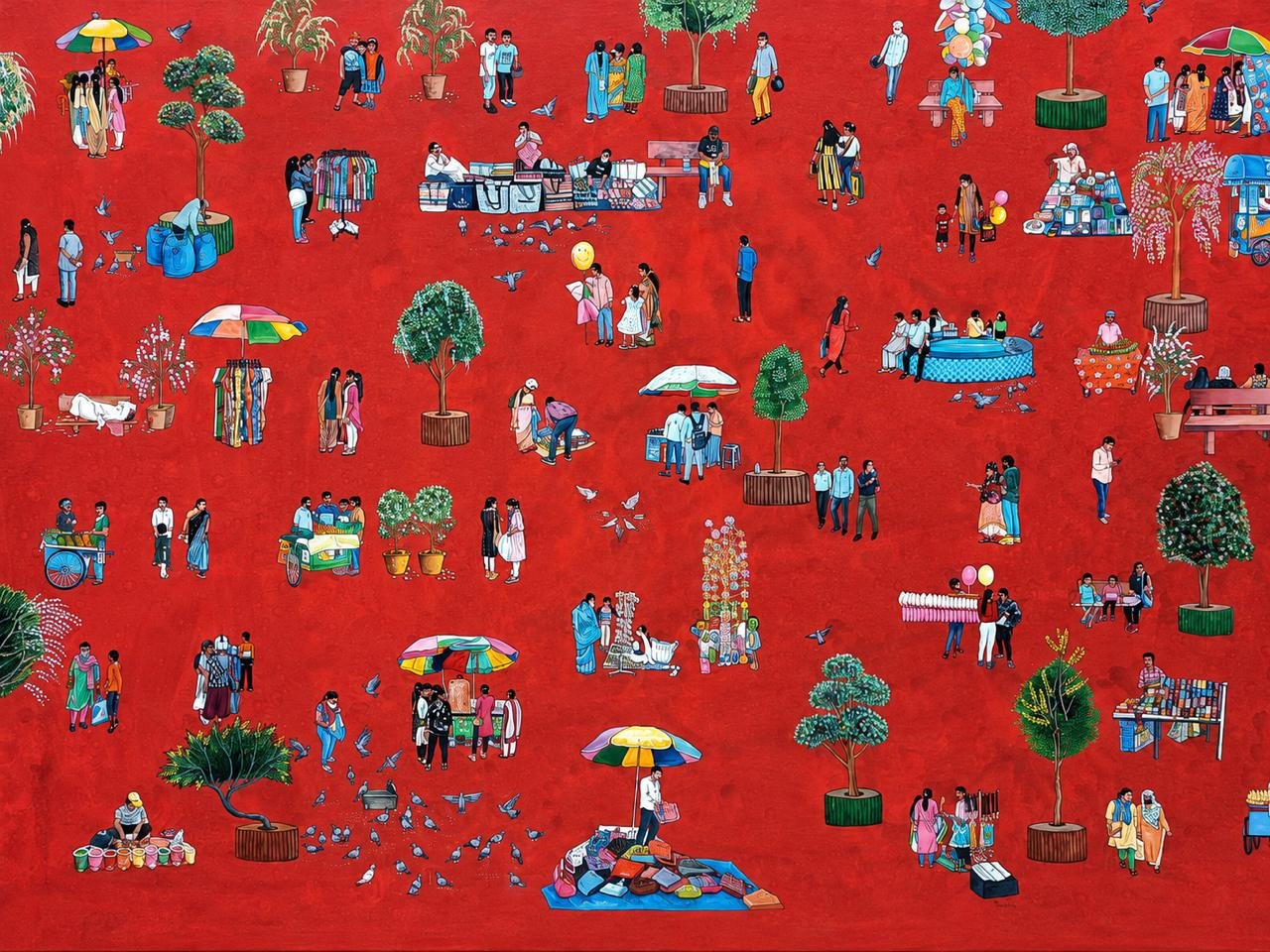
Majhi’s interest in everyday life allows these less visible dimensions of place to enter her artistic vocabulary.
Her work can be understood as an exploration of how people develop relationships with their surroundings and how those relationships change as life changes.
Odisha as an Artistic Landscape
Odisha occupies an important position within Majhi’s artistic journey.
Based in Bhubaneswar, she has worked across urban environments, rural settings and culturally distinctive regions of the state. These different spaces have provided contrasting experiences of contemporary life.
Bhubaneswar represents an evolving urban environment, while rural and tribal contexts reveal different relationships between community, landscape and tradition.
Moving between such environments creates opportunities to examine how belonging operates under different circumstances.
The city can be home.
A village can be home.
A landscape can be home.
A cultural tradition can also become a form of home.
Memory and Familiar Places
Memory is one of the ways people maintain a relationship with places.
Even when surroundings change, memories can preserve earlier versions of those environments.
A familiar road may look different after development, but memories of walking through it remain.
A neighbourhood may acquire new buildings while older associations continue to exist in people’s minds.
An artistic practice concerned with memory can therefore become a way of examining the tension between what remains and what changes.
Majhi’s visual narratives often draw attention to this relationship between experience and transformation.
The Landscape of Niyamgiri
Majhi’s sustained engagement with the Dongaria Kondh community and the Niyamgiri region provides another important perspective on belonging.
For communities whose lives are closely connected with their natural environment, landscape is not simply scenery.
It can be connected with livelihood, cultural practices, knowledge systems, spiritual traditions and collective identity.
Majhi’s artistic engagement with this context has influenced her thinking about mountains, natural materials, cultural symbolism and relationships between people and their environment.
This offers a broader understanding of home—one in which geography and culture cannot easily be separated.
Belonging Through Cultural Knowledge
Cultural knowledge can also create a sense of belonging.
Traditional artistic practices, patterns, colours, rituals and forms of making carry knowledge from one generation to another. They provide communities with ways of understanding their own histories and identities.
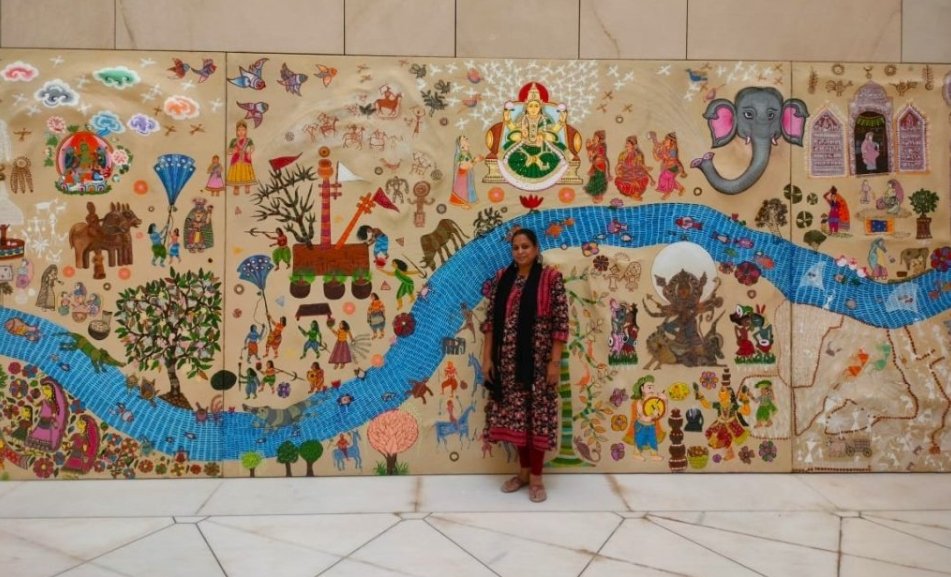
Majhi’s interest in traditional art and indigenous visual culture allows these forms of knowledge to enter conversations within contemporary art.
The process is not simply about preserving an old visual style.
It can also involve asking what happens when traditional knowledge encounters contemporary circumstances.
How does cultural identity adapt?
What remains constant?
What changes?
And how can artistic practice help keep these questions visible?
Urban and Rural Ideas of Home
Modern India contains many different experiences of belonging.
For some people, home is closely associated with ancestral villages. For others, it is connected with rapidly expanding cities. Many people move between rural and urban environments for education, employment or other opportunities.
Majhi’s artistic journey across different social and geographical contexts provides a perspective on these transitions.
Her practice does not require rural and urban life to be understood as opposites.
Instead, they can be seen as connected environments.
People, memories, ideas and cultural practices move between them.
Public Art and Shared Belonging
Public art can create another form of belonging.
When an artwork becomes part of a neighbourhood or public environment, it can contribute to how people identify with that space.
A mural can become a familiar landmark.
A community artwork can reflect shared experiences.
A public installation can create a place where people stop, interact and remember an event.
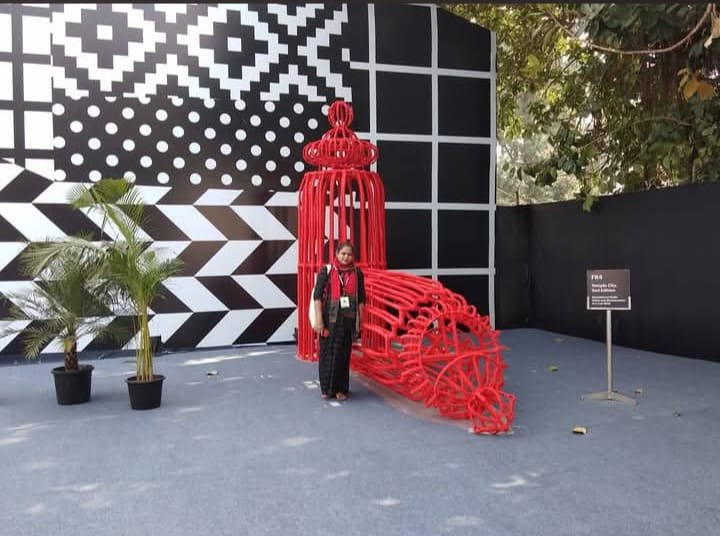
Majhi’s work in public spaces demonstrates this possibility.
The artwork does not belong exclusively to the artist after it enters a shared environment. It can acquire new associations through the people who encounter it.
The Community as a Place of Belonging
Majhi’s community-based practice also expands the idea of home beyond geography.
A community can provide a sense of belonging through relationships.
Working with people requires more than observing their surroundings. It involves communication, participation and an understanding of existing cultural practices.
Through such engagement, art can become a space where people recognise aspects of their own experiences.
The artwork then becomes a meeting point between individual expression and collective identity.
Children and the Meaning of Home
Majhi’s art-education work with children offers another perspective.
Children often express their understanding of home through surprisingly simple subjects: family members, animals, trees, houses, festivals, food, journeys and everyday activities.
These subjects may appear ordinary to adults, but they can represent the child’s emotional map of the world.
By encouraging children to observe and express their own experiences, Majhi creates opportunities for them to explore what places mean to them.
The resulting creative process is therefore not only about learning artistic techniques.
It is also about recognising personal experience as something worthy of artistic expression.
Belonging in a Changing World
The idea of home becomes especially complex when environments change rapidly.
Urban expansion, migration, technological development and changing economic conditions can reshape relationships with place.
Yet belonging does not necessarily disappear.
It can adapt.
People create new memories while carrying older ones.
Traditional practices may change while retaining their essential meaning.
New urban environments can develop their own cultural identities.
Majhi’s contemporary practice operates within this changing landscape.
Art as a Map of Belonging
An artist does not necessarily need to create a literal map to explore geography.
Colour can suggest a landscape.
A repeated form can recall cultural tradition.
A figure can represent community.
A public artwork can identify a place.
A material can evoke a particular environment.
Through such visual choices, art can create an emotional map of belonging.
Majhi’s multidisciplinary vocabulary provides multiple ways of creating these connections.
Connecting Personal and Collective Memory
Belonging is both personal and collective.
One person may remember a place through a childhood experience, while a community may remember the same place through generations of shared history.
Contemporary art can bring these different levels of memory into conversation.
Majhi’s practice often moves between individual observation and collective experience, allowing everyday moments to coexist with larger cultural questions.
This makes her work relevant to a broader discussion about how contemporary Indian artists understand identity in a changing society.
The Meaning of Home in Contemporary Art
Satyabhama Majhi’s artistic journey demonstrates that the concept of home can be explored without reducing it to a single location.
Home can be landscape.
Home can be memory.
Home can be community.
Home can be culture.
Home can also be an evolving relationship between people and their surroundings.
Her engagement with Bhubaneswar, Odisha’s rural and tribal contexts, public spaces, children and cultural practitioners provides multiple perspectives on this idea.
Rather than offering one definition of belonging, her work opens a space for viewers to consider their own relationships with place.
Conclusion
The idea of home remains one of the most universal human experiences, yet every person experiences it differently.
Through her contemporary artistic practice, Satyabhama Majhi explores the layers that turn physical surroundings into meaningful places. Her engagement with landscape, communities, cultural memory, public spaces and everyday experience reveals belonging as something created through relationships.
Her art reminds us that places are not simply locations on a map.
They are collections of memories.
They are shaped by people.
They carry cultural knowledge.
They change with time.
And through art, their meanings can remain visible even as the physical world around them continues to evolve.
For Majhi, exploring place is therefore also a way of exploring identity—and exploring identity is, in many ways, an exploration of what we call home.

