

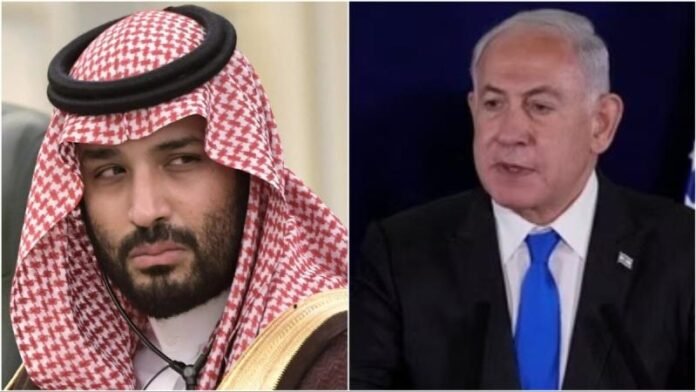
The politics of the Middle East and Horn of Africa seems to be at a new turning point. On 26 December 2025, Israel recognized Somaliland as an independent country. After this, there is now discussion that Israel and its allies can also recognize South Yemen as a country. The interests of Saudi Arabia and UAE are clashing with each other regarding Yemen. Israel seems to be getting strategic benefit from this situation.
Why is there demand for South Yemen?
South Yemen has previously been a separate country and its boundaries are clearly defined. The political culture here is considered more liberal than that of North Yemen. The Southern Transitional Council (STC) has established a functioning administration here, but its position remains weak due to lack of international recognition.
STC was established in the year 2017. This organization is led by Aidras al-Zobaidi. Its headquarters is in Aden, the southern city of Yemen. STC calls itself the voice of South Yemen and its aim is to divide Yemen into two parts and create a separate southern country. Its supporters constantly wave the old flag of South Yemen and openly demand a separate country.
What benefit does Israel gain from South Yemen?
Experts believe that if South Yemen is recognized, the influence of organizations like Iran-backed Houthi rebels and Muslim Brotherhood will reduce. Besides, control over important sea routes of Red Sea and Arabian Sea will be strengthened. Israel can take advantage of this situation in the ongoing conflict between UAE and Saudi over Yemen. For this reason, the question is being raised whether the path is being prepared for the formation of a new country in the Gulf region.
How is a country recognized?
Recognizing a country means accepting that it is an independent and sovereign nation. Generally recognition is given in two ways. The first method is formal, in which a country makes an official announcement. This announcement is made through a statement by the President or the Foreign Minister, a press conference, a government notification or a resolution in Parliament.
After this, opening embassies, appointing ambassadors and making bilateral treaties strengthen recognition. The second method is practical. In this, an entity is treated as a country even without formal declaration, such as holding high-level talks, sending official delegations, entering into long agreements or accepting its passport.

