

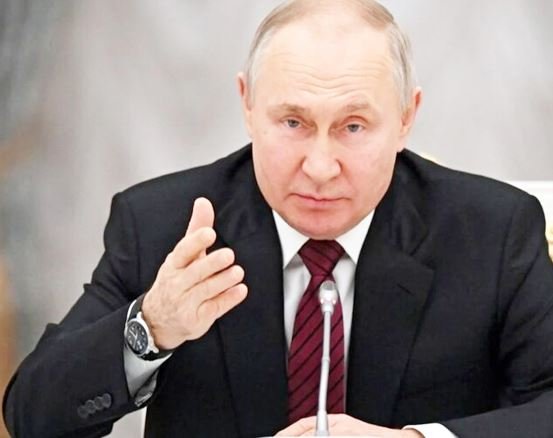

Moscow. European countries have started conspiring against Russian President Vladimir Putin as soon as he returned from his visit to India. The world’s most prosperous democracies are preparing for their toughest action yet on Russia’s offshore oil trade. In fact, the European Union (EU) and G7 countries are hatching a new conspiracy against Russia under which these countries are planning to impose a complete maritime ban on Russian oil exports. The move would directly target Russia’s war economy, as oil provides about a quarter of Russia’s central budget. According to an exclusive report, the plan would completely eliminate the price cap on Russian oil and ban the use of Western tankers, insurance and flags. Will this cause an earthquake in the global oil market? Let us understand the entire incident in detail.
Reports are claiming that the G7 countries and the European Union have started considering a complete ban on maritime services for Russian crude oil. The move would block Western shipping and insurance services, which still carry the bulk of Russia’s oil exports. Following Russia’s invasion of Ukraine in 2022, the G7 countries (US, UK, Canada, France, Germany, Italy, Japan) and the EU banned Russian oil imports. But instead of a complete shutdown, they adopted a clever mechanism – a price cap. Under this, Western shipping and insurance services are available if the price of Russian crude oil is kept below $60 per barrel. This caused difficulty in selling oil to Russia, but did not cause complete disruption.
Russia dodged it with time. Moscow developed a secret fleet of ships called the Shadow Fleet – old, unregulated tankers inspired by countries such as Iran and Venezuela. Quoting sources, it is being said that G7 and EU are now talking about bringing a complete maritime services ban by keeping the price cap aside. What does it mean? Any ship carrying Russian oil or fuel will not get Western tanker, insurance or registration services – no matter where it is going. This plan will mainly target Russia’s Asian markets. More than a third of Russia’s oil exports (mainly to India and China) still come via tankers from EU countries such as Greece, Cyprus and Malta.

